
Table of Contents
Olive Oil And The Microbiome
Olive Oil Health Benefits
Cooking With Extra Virgin Olive Oil Benefits
Oils Best For Cooking
Oils Best for Health
Coconut Oil
Further Reading And References
Olive Oil And The Microbiome
Olive oil does not seem to be an obvious choice as a food substance that can positively influence your microbiome, but in reality it is.
In a study, mice fed with olive oil demonstrated more healthy microorganisms in their guts than mice fed butter. The butter fed mice also had significantly higher systolic blood pressure and showed signs of metabolic syndrome (such as increased body weights, blood pressure, and insulin levels) when compared to those fed olive oil. (1)
In another study, high insulin resistance patients were given a Mediterranean diet with extra virgin olive oil (50g/day) and red wine (270ml/day) over a 30 day period. This diet significantly increased the number of faecal Bifidobacteria and Butyricimonas (intestinal barrier protectors) and significantly decreased the abundance of Rikenellaceae, Desulfovibrionaceae and Prevotella (opportunist pathogen and mucin-degrading bacterial). Additionally, the patients’ triglycerides, glucose and CRP (inflammation marker) levels decreased and HDL (good) cholesterol levels increased improving associated cardiovascular risk, over two 30 day diet periods, associated with a rise in Bifidobacterium and Butyricimonas and a decrease in Clostridium. (2)
Olive Oil is mostly composed of monounsaturated fatty acids, Omega 9. These do not seem to have an impact on the numbers and diversity of bacteria, in particular between Bacteroidetes and Firmicutes ratio, but they do seem to have an impact at the genera (group of bacteria) level (in particular bacteria from the genera Parabacteroides, Prevotella, and Turicibacter). (10)
Olive Oil Health Benefits
Olive oil:
- contains a high amount of antioxidants
- is anti-inflammatory
- is protective against heart disease
- may fight Alzheimer’s
- may reduce Type 2 diabetes risk
- has anticancer properties
- can help treat rheumatoid arthritis
- has antibacterial properties
Cooking With Extra Virgin Olive Oil Benefits
Researchers found that when garlic, onion and tomatoes were sautéed together with extra virgin olive oil, this released polyphenols (naringenin, ferulic acid, and quercetin) from the vegetables and also, molecules that are similar to carotenoids which have high antioxidant potential. These compounds have anti-inflammatory properties. (3)
Oils Best For Cooking
BBC’s Trust Me I’m a Doctor investigated which oils were the best for cooking with. They found:
- oils high in polyunsaturated fatty acids, such as corn oil and sunflower oil, generated very high levels of oxidative products known as aldehydes, which are carcinogenic
- oils rich in saturated fatty acids or monounsaturated fatty acids (like butter or olive oil) produced far fewer aldehydes and other potentially unhealthy products
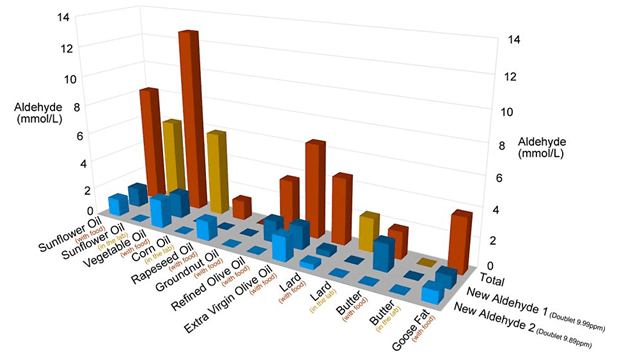
In the graph above, orange represents the amount of toxic aldehydes found in testing of oils with food and in the lab without food (in yellow).
The vegetable oil was used multiple times in a deep fat fryer, which increases the amount of oxidation.
Groundnut oil was not tested under laboratory conditions so conclusions should not be drawn from the single apparently ‘negative’ sample from a volunteer, since the temperature it was heated was unknown.
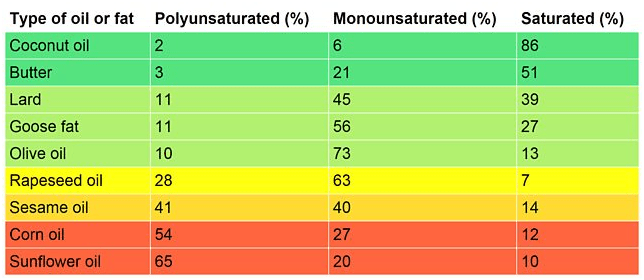
Composition of some common oils (coloured for degree of stability when cooking)
Oils Best for Health
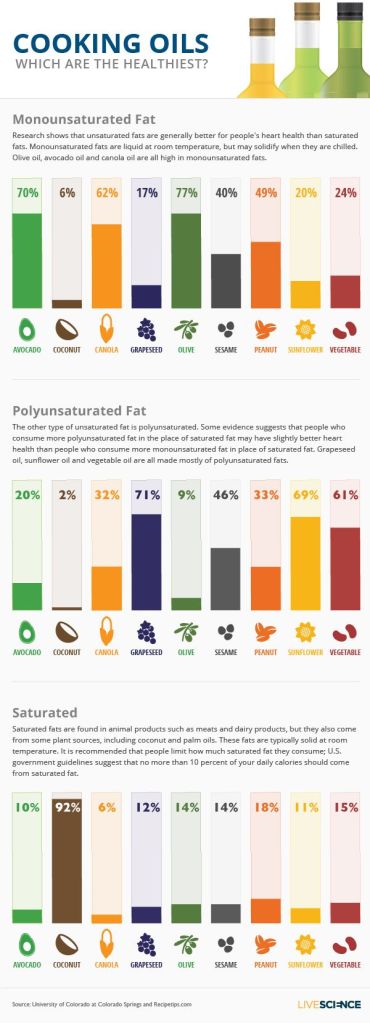
The below infographic from an article in Live Science, shows the different types of fat content in a variety of cooking oils:
Coconut Oil
Although coconut oil seems to have become the latest health craze, it is significantly high in saturated fat. Coconut oil increases both HDL (good) & LDL (bad) cholesterol, but more research is needed. Since it is 90% saturated fat, the current advice is to have unsaturated fats (which include polyunsaturated fats and monounsaturated fats) instead (e.g. olive oil) until further research proves otherwise. (7) (8) (9)
Further Reading And References
(5) BBC Two, Trust Me I’m a Doctor, Which oils are best to cook with?
(7) David Derbyshire, Coconut oil: are the health benefits a big fat lie?, The Guardian, 9 Jul 2017
 IBS Researcher