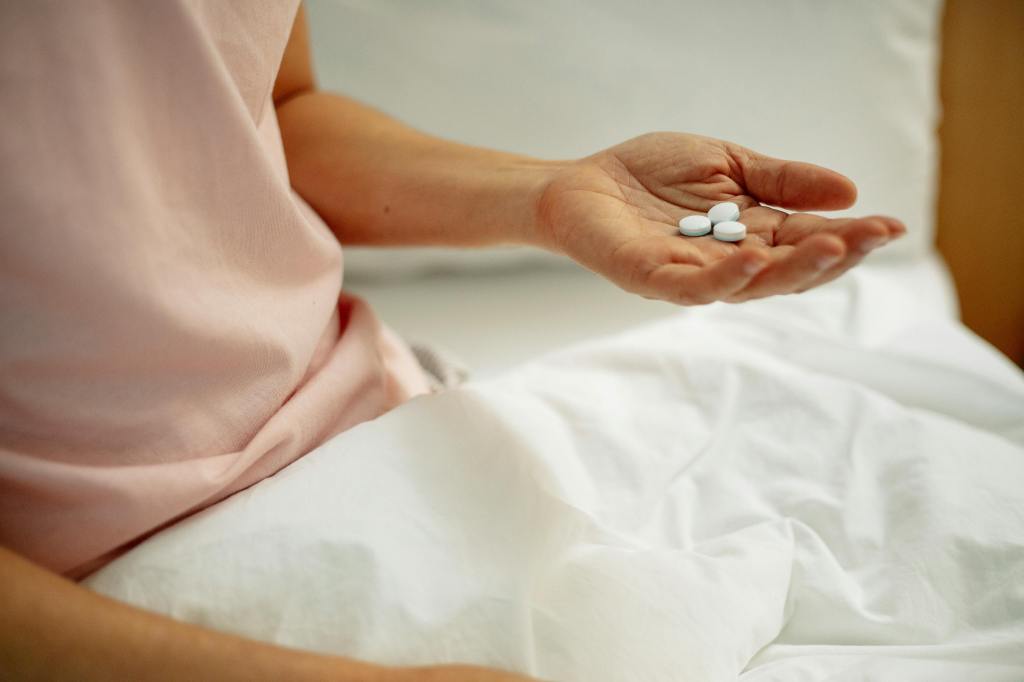
Antibiotics can significantly deplete both good and bad bacteria in your body. After a course of antibiotics bacteria slowly rebuild, all being well, they eventually return to balance. However, this can take time and rebalance may not be achieved, meaning that bad bacteria dominate resulting in dysbiosis (7). Studies have found that gut microbiome diversity was impacted as early as one day after the treatment ended and remained altered for up to six months (10).
Whilst taking antibiotics, if you take probiotics at the right time (at least two hours away from both previous and next antibiotic doses), they can pass through your system helping to protect the good bacteria and defend against any bad bacteria starting to dominate. The next antibiotic dose will still affect the microbiome, but some of the good bugs will survive helping the rebalancing effect when the course of antibiotics ends. (1)
Not all probiotics are the same when it comes to protection from antibiotic associated diarrhoea (10). A comparison of Lactobacillus plantarum, Lactobacillus casei and Lactobacillus rhamnosus found that all helped restore the microbiome after a course of antibiotics. Lactobacillus casei was especially effective including building those strains that produce short chain fatty acids (SCFAs), particularly acetate and butyrate, which have health promoting properties. Additionally, it reduced inflammation promoting compounds, either through the SCFAs or the restoration of the microbiome. (2) In a study, Lactobacillus rhamnosus GG was also considered helpful (3).
Saccharomyces Boulardii, which is a beneficial yeast that has been proven to prevent antibiotic associated diarrhoea, is the best thing to take whilst on antibiotics. The reason it is so effective is that since it is a yeast and doesn’t consist of bacteria, antibiotics won’t affect it, so it can do its job. Take 2 Saccharomyces Boulardii capsules after a couple of mouthfuls of food at breakfast and at dinner whilst taking antibiotics and for 2 weeks to a month afterwards. If you start to become constipated on Saccharomyces Boulardii, this suggests that it has or is doing its job and it might be possible to come off of them. Probiotics can be taken in addition, bearing in mind the timing mentioned above.
However, the best duration to continue probiotics after antibiotics to allow gut microbiome recovery is unknown. In most clinical trials, probiotics were taken during antibiotic administration and an additional seven days afterward (10).
Some believe that there is another preventative measure that can be taken, which is to cut sugar intake whilst on antibiotics. Good bacteria not only keep bad bacteria under control, but also fungi such as candida albicans, a form of yeast, which some think that an overgrowth of which can lead to gut symptoms such as diarrhoea, due to candida loving sugar and refined carbohydrates such as white bread and pasta that can be easily turned to sugar. Cutting out or reducing refined carbohydrates is generally recommended. It is thought that this is especially true when on antibiotics, in particular whilst the good bacteria are being compromised, may be unable to keep candida under control and the only other way to do this is to reduce their food sources. However, there is not enough scientific research to confirm whether yeasts like candida play a part in IBS and also whether there is a link between sugar and increasing the likelihood of candida infections (8) (9).
If you are symptom free, that is, not experienced antibiotic associated diarrhoea since the Saccharomyces Boulardii and probiotics have been doing their job, it is important to start feeding your good gut bacteria to help them repopulate. Fibre, including whole grains and eating a wide colour spectrum of vegetables can assist in promoting bacterial diversity. It is this diversity that helps to keep the baddies at bay. (1)
Cautionary Note
In a research study, it was found that probiotics during antibiotic use inhibited the return of a person’s own microbiome with this effect lasting up to 6 months. Other patients in the study had their own microbiome extracted prior to antibiotics and given back to them after the antibiotic course. The microbiome of these patients normalised within days. This is not a scalable solution though.
However, scientists have found that stool samples used as part of studies, only partially correlate with the actual microbiome contents of the gut, so may be unreliable in studying gut microbiome health.
In a further study, involving 15 people, samples were taken within the gastrointestinal tract. The group was split into two, one given 11 strains of commonly used probiotics and the other a placebo. Those given probiotics ended up in two distinct groups: in one set their guts resisted the colonisation of the probiotics and in the other set, the probiotics not only colonised their gut, but also changed the gut microbiome and the genes of the patient. The placebo group were unaffected.
This means that treatment with probiotics ideally needs to be tailored to the individual with measurements being developed to aid this process.
Conversely, there is some evidence that probiotics can help against antibiotic-associated diarrhoea as discussed further above. In addition to Saccharomyces boulardii, there are many bacterial strains that have been studied that have been found to have this benefit, further to the ones discussed above, such as Bifidobacterium animalis subsp. lactis BB-12®, Lactobacillus bulgaricus and Lactobacillius reuteri.
 IBS Researcher