
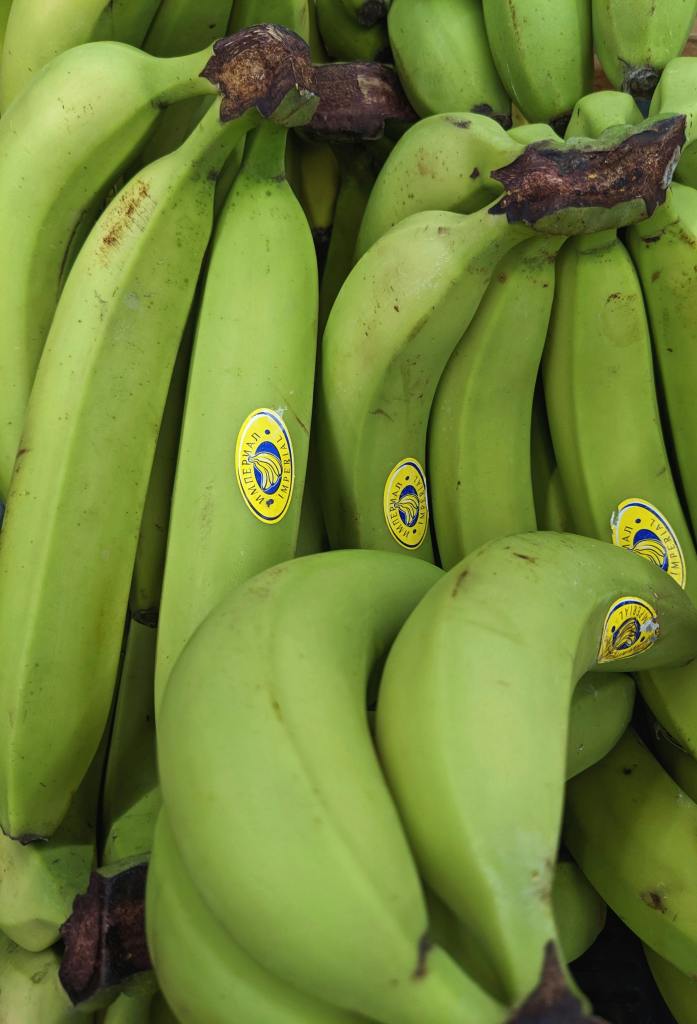
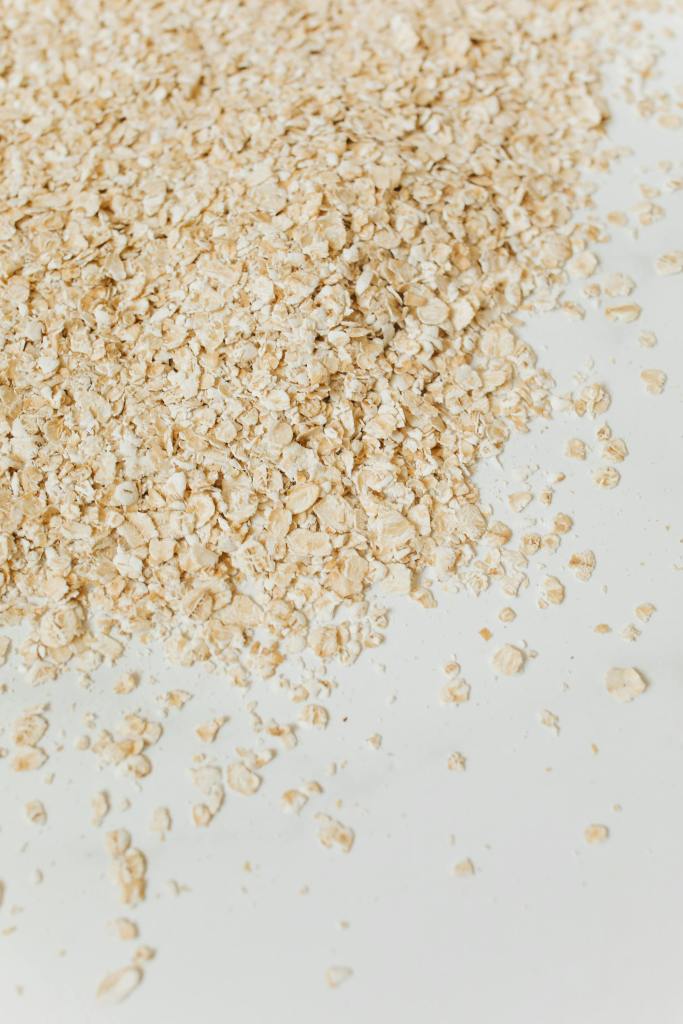
Image Credits: left: Photo by cottonbro studio via Pexels; middle: Photo by Mikhail Konetski via Pexels;
right: Photo by Polina Tankilevitch via Pexels
Table of Contents
What is resistant starch?
Resistant Starch vs FODMAPs
Good Food Sources of Resistant Starch
Potatoes
Oats
Further Reading And References
What is resistant starch?
Resistant starch escapes digestion in the small intestine, instead ending up in the large intestine where it is fermented. There are four types of resistant starch:
- RS1 is not accessible by digestive enzymes – sources include partially milled grains and legumes
- RS2 escapes digestion because of the nature of the food – sources include under ripe bananas and high-amylose starches
- RS3 is produced when foods are cooked and then cooled – sources include bread, tortillas, cooked then cooled potatoes, rice and pasta
- RS4 is a chemically modified starch
Resistant Starch vs FODMAPs
FODMAPs act as prebiotics, feeding gut bacteria. They are rapidly fermented in the gut, resulting in rapid increases in intestinal gas causing pain, bloating and discomfort in some IBS sufferers. Resistant starch is also a prebiotic, but is more slowly fermented in the large intestine resulting in a gradual increase in gas, that may be better tolerated and not result in gaseous distension and discomfort as with FODMAPs. Resistant starch also releases short chain fatty acids (SCFAs) which promote a healthy colon. (1)
Good Food Sources of Resistant Starch
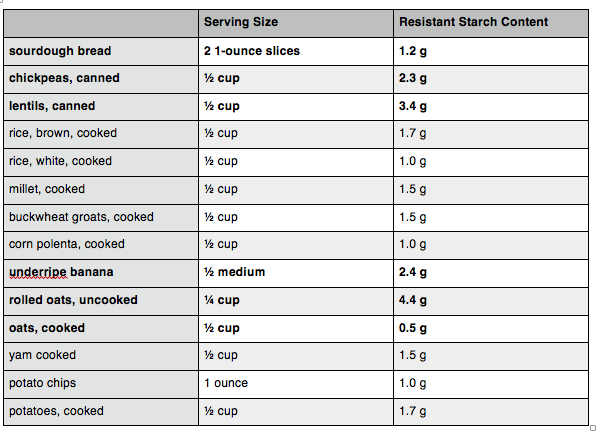
Some sources of resistant starch are mentioned in the first section on this page. The table below contains food sources of resistant starch that have a (green) low FODMAP serving. This means that you can try to include some of these in your diet to improve bowel health.
| Food | Resistant starch content (g) |
| Under-ripe banana, 1 medium | 4.7 |
| Rolled oats (20g), 1/4 cup, uncooked | 4.4 |
| Oats, 1 cup (90 gram), cooked | 0.5 |
| Lentils, 1/2 cup (100g), cooked | 3.4 |
| Hi-maize resistant starch, 1 tablespoon | 4.5 |
In the below table, serving sizes are given to accurately represent the relative resistant starch content of each food; however, only those in boldface must be portion-controlled on the elimination phase of a low-FODMAP diet.
Potatoes
Although potatoes contain highly digestible starches that can cause blood sugar spikes, they are also high in resistant starch leading to an increase in butyrate production.
In a study by Dr. Thomas Schmidt and his team of the University of Michigan, the effectiveness of different resistant starches to produce butyrate was tested. 174 university students, who otherwise instructed not modify their diets were given resistant starch supplements. Corn starch (the control group) was compared to the effect of resistant starch from potatoes, maize, and inulin from chicory root. Resistant starch from potatoes led to the greatest increase in butyrate production.
All of the resistant starches led to changes in the gut microbiota, but such alterations do not always equate to increases in the production of butyrate. This is because butyrate producing bacteria rely on other types of bacteria in the gut to carry out the first stage of digestion, before they can produce butyrate. These types of bacteria are called “primary degraders”. Additionally, the amount of butyrate produced in response to the resistant starch, correlated with the numbers of primary degrading bacteria in the guts of the participants at the start of the study. This means that bacterial diversity is key to be able to make the most of the health benefits from resistant starch intake. Bacterial diversity is achieved by consuming a varied and balanced diet.
Oats
As part of the ‘Trust Me, I’m a Doctor’, BBC program, Dr Chris van Tullekan consumed 100g oats a day for 4 weeks after consuming a refined diet without whole grains or oats for 2 weeks. Dr Karen Scott of the Rowett Institute in Aberdeen tested for the bacteria in Chris’s gut before and after and found that there was a marked increase in healthful bacteria, which produce chemicals which are good for the gut lining and hearts. The beta glucan content of oats also has been shown to reduce cholesterol alongside providing other health benefits.
Oats should be soaked rather than eating them raw. When raw, they can cause indigestion, bloating, gas and constipation. They also contain phytates which can bind to some of the minerals in our diets reducing the body’s ability to absorb them. Research has shown that soaking oats overnight can significantly reduce the amount of phytates.
Further Reading And References
(2) Sarah Skovran: Resistant Starches and Your Low-FODMAP Diet, ibsfree.net, March 10, 2017
(4) BBC Two: Trust Me, I’m a Doctor, Do probiotics do any good?
(5) Lisa Antao, Is it safe to eat raw oats?, DNA, Dec 3, 2017
(6) Onlymyhealth Staff Writer: 5 Health Benefits Of Raw Oats, Aug 16, 2019
 IBS Researcher